AI Judges: Should Robots Be in the Courtroom?
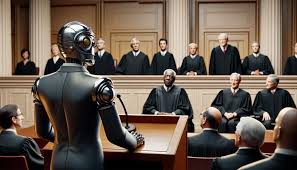
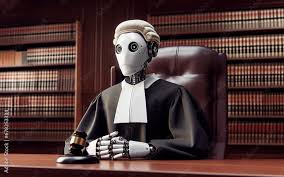
Imagine walking into a courtroom and instead of a human judge, you’re met with an AI—an emotionless machine trained on decades of legal precedent, capable of evaluating evidence, detecting bias, and delivering what it calculates to be the fairest ruling.
Sound like science fiction? It’s not. In some parts of the world, it’s already starting.
As artificial intelligence seeps deeper into nearly every sector of society, the justice system—one of the oldest and most human institutions—is now facing a controversial question: Should robots have the power to decide guilt, innocence, or even punishment?
The Rise of AI in the Justice System
While fully autonomous AI judges are still rare, algorithms are already influencing key decisions in courtrooms worldwide:
-
Predictive policing uses AI to forecast where crimes might occur.
-
Risk assessment tools help determine bail, parole, or sentencing severity based on data patterns.
-
Document analysis algorithms assist in reviewing evidence and legal filings at speeds no human can match.
-
In China, some courts already use AI to suggest rulings in routine civil cases like loan defaults or traffic violations.
Proponents argue that it’s just a matter of time before AI becomes a co-judge—or even the only judge—in many legal situations.
The Promised Benefits of AI Judges
AI in the courtroom offers a range of potential advantages:
⚖️ Efficiency and Speed
AI can process complex documents, legal history, and evidence in seconds—cutting down years-long trials to weeks or even days.
🧠 Unbiased Logic (In Theory)
Unlike humans, AI doesn’t get tired, angry, racist, or swayed by public opinion. If trained properly, it could remove emotional and cultural bias from decisions.
💸 Lower Legal Costs
Automation could drastically reduce the costs of litigation, making justice more accessible to people who currently can’t afford it.
📝 Consistency in Rulings
A machine can apply the same logic to every case without being influenced by mood, fatigue, or prejudice.
But the Risks Are Profound
The idea of AI wielding legal power also raises deep concerns:
❗ Bias in, Bias Out
AI is only as fair as the data it’s trained on. If historical rulings were biased—against minorities, women, or the poor—the AI will learn and replicate that bias, often invisibly.
🧍 Loss of Human Judgment
Judges don’t just interpret law—they use wisdom, empathy, and moral reasoning. Can a machine understand mercy? Can it contextualize trauma?
🔒 Lack of Transparency
Many AI models, especially those developed by private companies, are “black boxes.” Defendants might never know why they were denied bail or given a harsh sentence.
🧑⚖️ Accountability Vacuum
If an AI makes a legal error—or a life-altering decision—who is responsible? The programmer? The government? The algorithm itself?
Where AI Is Already Making Legal Calls
-
Estonia is developing a “robot judge” to resolve small claims disputes under €7,000.
-
China has implemented AI in courtrooms to handle high-volume, low-stakes cases and assist human judges.
-
The U.S. uses COMPAS and similar tools in several states to assist in sentencing and parole decisions, though their accuracy and fairness have come under fire.
So while AI may not yet be wearing robes, it’s already behind the bench in some capacity.
The Ethical Crossroads
The debate around AI in the justice system is really a debate about values:
-
Do we value speed over empathy?
-
Should fairness mean identical treatment, or individual understanding?
-
And ultimately, can justice ever be truly blind—when it’s coded by humans?
Legal scholars argue that while AI can assist in the courtroom, it must never replace human judges in critical decisions involving life, liberty, or morality.
Final Thought: Should a Machine Pass Judgment?
A courtroom isn’t just a place for facts and logic—it’s a place for human stories, conflict, and sometimes forgiveness. AI might help cut costs or reduce case backlogs, but when it comes to deciding someone’s fate, do we really want to hand that power to a machine?
The future courtroom may well include an AI at the bench—but whether it’s a tool or a ruler is a choice we still have to make.
Before the gavel drops, the debate must begin.