Self-Replicating Machines: Humanity’s Greatest Tool or Threat?
Imagine machines that can build copies of themselves—autonomously gathering materials, assembling parts, and multiplying without human intervention. This is no longer just the stuff of sci-fi movies or dystopian nightmares. Self-replicating machines are rapidly transitioning from theory to reality, and with them comes both staggering promise and profound risk.
Could these machines become the ultimate tool to solve some of humanity’s biggest challenges—or could they spiral out of control and threaten our very existence? The debate is heating up, and the stakes have never been higher.
What Are Self-Replicating Machines?
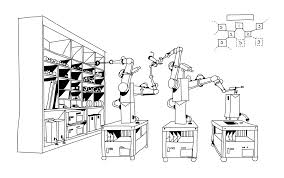
At their core, self-replicating machines are robotic systems designed to autonomously produce copies of themselves using raw materials found in their environment. Unlike traditional robots that rely on humans for manufacturing and maintenance, these machines can:
-
Identify and extract resources
-
Process materials into usable parts
-
Assemble new machines identical to themselves
The concept was first seriously studied by mathematician John von Neumann in the 1940s and later popularized in science fiction. But today, with advances in robotics, 3D printing, and AI, self-replication is moving from the drawing board to labs—and potentially to the wild.
The Incredible Potential
🌍 Space Exploration and Colonization
Self-replicating robots could be the key to sustainable space missions. Imagine sending a few machines to Mars or the Moon that could mine local resources, build habitats, and manufacture more robots—dramatically reducing the cost and risk of human colonization.
🔧 Industrial Automation and Manufacturing
Factories of the future might be run by robots that build and repair themselves, slashing production costs and downtime. This could revolutionize industries from electronics to construction.
🌱 Environmental Cleanup
Self-replicators could be programmed to detoxify polluted sites, recycle waste, or restore damaged ecosystems, multiplying their efforts without human oversight.
🔬 Scientific Research
In hazardous or inaccessible environments—deep oceans, volcanoes, radioactive zones—these machines could explore and collect data continuously by replicating and adapting to conditions.
The Dark Side: When Good Tools Go Wrong
The same qualities that make self-replicating machines powerful also make them potentially dangerous.
⚠️ The “Grey Goo” Scenario
This famous thought experiment imagines out-of-control self-replicating nanobots consuming all matter on Earth to create copies of themselves—a runaway replication disaster wiping out life as we know it.
While experts argue this scenario is unlikely with current tech, the risk of unintended replication spirals remains a serious concern.
🛠️ Loss of Control
Once machines can build themselves and evolve independently, how do we ensure they don’t mutate beyond our control or develop behaviors contrary to human values?
🌐 Economic and Social Disruption
If machines start self-replicating in factories or fields, what happens to jobs, economies, and social structures? Could this technology widen inequality or cause mass unemployment?
🔒 Security Threats
Self-replicating machines could be weaponized or hacked, turning them into tools for cyberwarfare, sabotage, or espionage.
Current Progress and Challenges
While fully autonomous self-replicating robots are still in early stages, there have been notable breakthroughs:
-
3D printers that print parts for other printers, helping bootstrap production cycles
-
Small-scale robots that assemble simple copies of themselves in controlled environments
-
Experiments with self-replicating nanostructures and molecular machines
However, major technical hurdles remain—like sourcing raw materials autonomously, managing errors in replication, and ensuring machines can repair themselves efficiently.
Ethical and Regulatory Questions
Self-replicating machines raise urgent questions for policymakers and ethicists:
-
Should there be global regulations limiting or banning self-replication tech?
-
How do we assign liability if self-replicating machines cause harm?
-
What frameworks are needed to balance innovation with safety?
International cooperation may be key to preventing misuse or accidents on a planetary scale.
Final Thought: The Double-Edged Sword of Self-Replication
Self-replicating machines could be humanity’s greatest ally in solving problems from space exploration to environmental restoration. But like any powerful technology, they come with risks that demand caution, transparency, and robust oversight.
The question isn’t just whether we can build these machines—but whether we’re ready to control what we unleash.
If wielded wisely, self-replication could usher in a new industrial revolution. But if mishandled, it could become a threat that no firewall or fail-safe can stop.
The future of this technology will be one of our greatest tests—and one of our most profound choices.