How Close Are We to Uploading the Human Mind?
The idea of uploading a human mind—transferring everything that makes you you into a machine—has long lived in the realm of science fiction. From cyberpunk novels to blockbuster films, “mind uploading” is portrayed as the ultimate escape from mortality: digital immortality, infinite intelligence, freedom from the biological body.
But as neuroscience, computing, and AI accelerate at breakneck speed, the question is shifting from “Could we?” to “How close are we?”
Let’s unpack the science, the tech, and the wild possibilities behind one of humanity’s most mind-bending goals.
What Does It Mean to Upload a Mind?
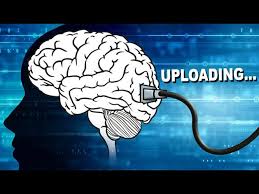
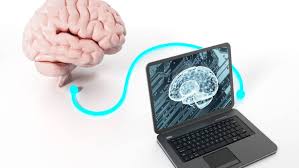
Mind uploading—also called whole brain emulation (WBE)—involves creating a digital replica of your brain’s structure and function. The goal is to:
-
Replicate memories, thoughts, and personality
-
Run your consciousness on a non-biological system (like a computer)
-
Preserve identity beyond biological death
In theory, this would let you “live” in virtual reality, control robotic bodies, or explore space as a disembodied intellect.
But here’s the challenge: the human brain is the most complex structure in the known universe. Capturing its every nuance is no small feat.
What We’d Need to Make It Happen
1. Full Brain Mapping (The Connectome)
To upload a mind, we first need to map the connectome—the total wiring diagram of every neuron and synapse in the brain.
This means:
-
Tracing ~86 billion neurons
-
Recording ~100 trillion synaptic connections
-
Capturing not just structure but function—neurotransmitter dynamics, firing patterns, and plasticity
We’ve managed this in tiny creatures like the C. elegans worm (302 neurons). The human brain? We’re nowhere near complete mapping, but efforts are growing.
🧠 Projects like the Human Connectome Project and BRAIN Initiative are helping to decode small slices of this massive puzzle.
2. Ultra-Precise Brain Scanning
Mind uploading would require scanning your brain at microscopic—or even nanoscopic—resolution.
Current imaging tech includes:
-
MRI & fMRI – Good for general structure and activity, but too coarse
-
Electron microscopy – Offers incredible detail, but only on dead tissue and one brain slice at a time
-
Brain slicing – A destructive process involving sectioning the brain for mapping (yes, you’d have to die first)
In short: if a future scanner could capture every neuron non-destructively, that would be a game-changer.
3. Understanding Consciousness
Even if we could copy the brain, would the resulting simulation feel like you?
The mind isn’t just hardware; it’s software shaped by emotions, experiences, sensory input, and awareness. Science still lacks a unified theory of consciousness, which makes defining what we’re trying to upload incredibly difficult.
Is the mind just computation? Or is something more—subjective experience, “qualia”—required?
Until we understand this better, uploading may replicate the brain’s data without replicating the self.
4. Sufficient Computational Power
Simulating a human brain in real time would require massive processing power—likely beyond what current supercomputers can offer.
Estimates suggest it might take exaflop-level performance (1 billion billion operations per second), plus enormous memory capacity.
Quantum computing, neuromorphic chips, and brain-inspired architectures could eventually bridge this gap—but we’re not there yet.
Could AI Help Us Get There?
AI is already helping decode brain signals, simulate neurons, and reconstruct speech or images from brain scans. Generative AI can mimic language and emotions in ways eerily close to human responses.
Some researchers even propose training AIs on a person’s digital history—text messages, videos, posts—to simulate their personality. It’s not true mind uploading, but it’s a soft, “shallow copy” of your behavioral patterns.
It’s like a digital ghost—not your mind, but your mirror.
Where Are We Now?
✅ We can simulate small networks of neurons
✅ We’ve uploaded the connectome of worms and fruit flies
✅ We’re beginning to decode thoughts from brain signals (with implants and AI)
❌ We cannot yet map or emulate a full human brain
❌ We don’t fully understand memory encoding or consciousness
❌ We have no non-destructive, high-resolution brain scanner
Could It Happen in Our Lifetime?
Optimists say mind uploading could be possible within 50–100 years. Others believe it’s centuries away—or may never be possible.
Some potential timelines:
-
2030s–2040s: Improved brain-machine interfaces, AI-powered memory prosthetics
-
2050s–2070s: Partial uploading (memory banks, skill emulation)
-
Late 21st century: Early full-upload trials (if tech and ethics align)
But ethical questions remain:
-
Who owns your mind data?
-
Can your digital self give consent?
-
Are uploads alive?
-
Do they have rights?
Final Thoughts
Mind uploading is one of the boldest, weirdest, and most profound goals science has ever considered. It raises spiritual, philosophical, and technological questions about what it means to be you.
Right now, we’re just scratching the surface. But with every brain we scan, every neural simulation we run, and every line of AI code we write, we inch closer to the unimaginable.
Someday, you might not just back up your files—you might back up yourself.