This Startup Wants to Put a Chip in Your Brain — Should You Be Scared?
It sounds like something straight out of a cyberpunk thriller: a tiny chip implanted in your brain, linking your thoughts to computers, AI, or even other people. But it’s not fiction anymore. Multiple startups — most famously Neuralink — are racing to make brain-computer interfaces (BCIs) a reality. Their mission? To unlock the human brain’s full potential, treat neurological disorders, and ultimately merge mind and machine.
But as with any revolutionary technology, the excitement comes with a shadow. So the question looms:
Should you be amazed — or afraid?
What Is a Brain Chip, Exactly?
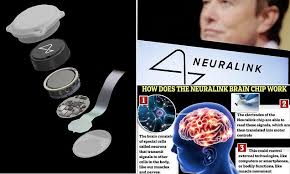
A brain chip, or neural implant, is a small electronic device that interfaces directly with your brain’s neural circuits. It can record brain signals, stimulate brain activity, or even send data to and from external devices like computers, prosthetics, or AI systems.
Think of it as a USB port for your brain.
Some of these chips are the size of a coin. Others are smaller than a grain of rice. They’re surgically implanted and typically sit on or within the brain’s cortex — the outer layer responsible for higher-level thinking and control.
Who’s Building This Future?
🧠 Neuralink (founded by Elon Musk)
Neuralink aims to create ultra-high bandwidth BCIs that can help people with paralysis control devices, restore sight and movement, and eventually allow human-AI symbiosis. Their chip, called the Link, has already been implanted in human test subjects as of 2024.
🧠 Synchron
Unlike Neuralink, Synchron’s device is implanted via the blood vessels — a less invasive method. It’s already been tested in humans and allows patients to send messages using their thoughts.
🧠 Blackrock Neurotech, Paradromics, and others
These startups are also working on BCI implants for medical use — helping people with ALS, spinal cord injuries, or stroke regain communication and movement.
Potential Benefits That Sound Almost Superhuman
-
✅ Restoring Movement: Paralyzed individuals could control robotic limbs or wheelchairs with their minds.
-
✅ Digital Telepathy: Send a message without typing — just by thinking it.
-
✅ Memory Enhancement: Imagine uploading memories or improving recall on demand.
-
✅ Mental Health Treatment: Precision stimulation could relieve depression, anxiety, PTSD, or addiction.
-
✅ AI Symbiosis: Connect your brain to AI tools for learning, creativity, or solving problems at superhuman speeds.
We’re talking about redefining what it means to be human.
So… Why Be Scared?
With this much power, it’s no surprise there’s a long list of risks and concerns.
⚠️ Privacy Invasion
If thoughts can be read or recorded, who owns that data? Could your mind be hacked? What if corporations or governments abuse access?
⚠️ Surveillance & Control
In dystopian scenarios, BCIs could be used to monitor dissent, manipulate emotions, or control behavior. “Thought police” might not stay fictional forever.
⚠️ Mental Autonomy
If your brain is linked to a machine, are your thoughts still your own? What happens if an external AI starts influencing your decisions?
⚠️ Health Risks
Brain surgery is never trivial. Risks include infection, bleeding, or long-term damage. Plus, implants can degrade or malfunction.
⚠️ Social Inequality
If only the rich can afford cognitive upgrades, will brain chips create a new class divide — the “neuro-elite” vs. everyone else?
The Ethics Are Complex — and Urgent
We’re not just talking about a new gadget. We’re talking about devices that could fundamentally alter consciousness, identity, and society.
Philosophers, ethicists, and policymakers are only beginning to wrestle with questions like:
-
Can a brain-chip-enhanced person still be held legally responsible for their actions?
-
Should children be allowed to get implants?
-
Will future employers demand cognitive augmentation?
Where Do We Stand Today?
-
✅ Brain implants for medical uses (like Parkinson’s or epilepsy) have existed for decades.
-
✅ Experimental brain chips are restoring communication in paralyzed individuals.
-
🚧 High-bandwidth, AI-integrated BCIs are still in early stages — but advancing fast.
-
🚨 Ethical frameworks and laws are lagging far behind the tech.
This is no longer science fiction — it’s science in motion. And it’s happening faster than most people realize.
Final Thoughts: Brave New Brain?
The idea of chipping the human brain is both thrilling and terrifying. The same technology that could restore independence to the disabled might also give rise to digital mind control, thought-based advertising, or AI-influenced decision-making.
So… should you be scared?
Maybe. But more importantly — you should be paying attention.
Because the future of your brain may not just be in your head anymore — it might be in the cloud.