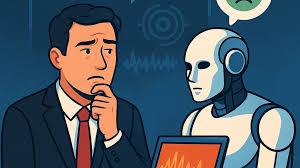
This AI Knows You’re Lying—Before You Say a Word
Imagine a technology so advanced that it can detect when you’re lying—not by listening to what you say, but by reading subtle signals your body gives off before you even speak. This isn’t a scene from a futuristic thriller; it’s the reality scientists and engineers are rapidly building with cutting-edge artificial intelligence.
From law enforcement to security screenings, and even everyday conversations, AI systems that can spot deception are pushing the boundaries of privacy, ethics, and truth. But how do they work? And what does it mean when machines can “know” you’re lying before you utter a single word?
The Science Behind Lie Detection AI
Traditional lie detection methods—like polygraphs—rely on measuring physiological signs such as heart rate, skin conductivity, and breathing patterns. However, these tools are often inaccurate and controversial.
Modern AI-powered lie detection goes far beyond that. It uses a combination of:
-
Facial microexpressions: Brief, involuntary facial movements that reveal true emotions
-
Voice stress analysis: Changes in tone, pitch, and speech patterns indicating stress or deception
-
Eye movement tracking: Shifts in gaze or blinking rates linked to lying
-
Body language: Subtle gestures and posture changes
-
Neural signals: In experimental setups, brainwave patterns detected via EEG
By analyzing these complex data points in real-time, AI can identify inconsistencies and “tells” that humans might miss.
How AI Detects Lies Before You Speak
Some of the newest AI systems combine predictive modeling with behavioral analysis to forecast deception even before a person answers a question. Here’s how:
-
Baseline Behavior: AI first learns your normal speech patterns, facial expressions, and gestures.
-
Pre-Answer Cues: It detects micro-tremors, pupil dilation, or brief hesitations—signs that occur milliseconds before a verbal response.
-
Contextual Analysis: Using natural language processing, it assesses the emotional content and likelihood of truthfulness in upcoming statements.
-
Real-Time Prediction: The AI then predicts deception with remarkable accuracy—sometimes even before you say a word.
Real-World Applications
🕵️ Law Enforcement and Security
AI lie detectors are being tested in airports and interrogation rooms to flag suspicious behavior quickly.
🏢 Employment Screening
Some companies are exploring AI tools during interviews to assess candidate honesty and emotional consistency.
🧠 Mental Health
Therapists could use AI insights to better understand patients’ unspoken feelings or denials.
🎭 Social Media and Online Interactions
Advanced lie detection might one day help identify fake news, fraudulent accounts, or deceptive behavior online.
Ethical and Privacy Concerns
While the technology sounds impressive, it raises critical questions:
-
Consent: Should people be forced or even asked to undergo AI lie detection?
-
Accuracy: No system is perfect—false positives could ruin lives or reputations.
-
Privacy: Constant monitoring of subtle cues feels invasive.
-
Bias: AI trained on limited datasets might misinterpret cultural or individual differences.
-
Legal Use: Could such AI be admissible evidence in court?
The Future of Truth-Telling Technology
AI lie detection is still evolving. Future advances might integrate brain-computer interfaces or even biochemical sensors to deepen understanding of deception.
But will this technology promote honesty—or create a surveillance society where privacy and trust erode? The balance between innovation and human rights will be crucial.
Final Thought: When Machines Know More Than We Do
The prospect of AI that can know you’re lying before you speak forces us to rethink communication, trust, and truth itself.
As machines become more adept at reading our hidden signals, the question isn’t just can they detect deception? but how should we use that power?
Because in a world where lies are seen before they’re spoken, the line between truth and control becomes razor-thin.