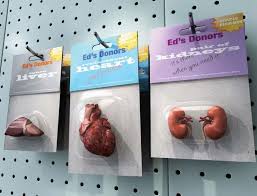
Will Lab-Made Organs End Transplant Waiting Lists?
Every day, people around the world die waiting for a life-saving organ transplant. The demand is overwhelming, and the supply—donated human organs—is heartbreakingly scarce. But science may be on the brink of a solution so radical it sounds like science fiction: lab-grown organs, custom-built for the patient who needs them.
Researchers are now using advanced biotechnology, stem cells, and even 3D printers to engineer human organs from scratch. The goal? To end the organ shortage forever.
So, how close are we? And what’s standing in the way?
Why the World Needs Lab-Grown Organs
The stats are sobering:
-
In the U.S. alone, over 100,000 people are on organ transplant waiting lists.
-
17 people die every day waiting for a donor match.
-
Many more never even qualify because they’re too old, too sick, or not a good genetic match.
Even when a donor is found, there are major risks:
-
The body might reject the new organ.
-
The recipient needs lifelong immunosuppressant drugs.
-
Transplants are expensive, invasive, and difficult to coordinate.
Lab-made organs offer a different vision: organs built from your own cells, designed for your body, and ready when you need them.
How Scientists Are Growing Organs in the Lab
This isn’t just one technology—it’s a mix of breakthroughs working together.
🧫 1. Stem Cell Engineering
Scientists can now take a few of your skin or blood cells and reprogram them into stem cells. These cells can then be guided to become heart, kidney, liver, or lung tissue—genetically identical to you.
🧱 2. 3D Bioprinting
Using custom-designed printers that deposit bio-inks made of living cells, researchers are printing mini-organs—called organoids—and even full-scale organ structures. Think of it as printing a kidney, layer by layer.
🫁 3. Decellularization
In some cases, scientists take a real human or animal organ and strip it of its cells, leaving behind a “scaffold.” Then they seed it with a patient’s own cells to rebuild the organ with a personal touch, reducing rejection risks.
What’s Already Working
Lab-grown organs aren’t science fiction—they’re science in progress.
-
Bladders: Doctors have successfully implanted lab-grown bladders into patients, with some living healthily for over a decade.
-
Tracheas (windpipes): Several have been bioengineered and transplanted with promising results.
-
Mini-livers and mini-brains: Not ready for full transplantation, but used for drug testing and disease modeling right now.
The Big Challenges
Despite the amazing progress, we’re not quite there yet for major organs like hearts and kidneys. Why?
🔬 Complexity
Livers and kidneys have millions of tiny structures, blood vessels, and interactions. Rebuilding that complexity with precision is still incredibly difficult.
💉 Vascularization
Organs need blood flow. Getting lab-grown organs to develop stable, functioning blood vessels remains one of the biggest hurdles.
⏳ Time and Cost
It can take weeks or months to grow an organ—and it’s still very expensive. We’re not at mass production scale yet.
The Future: Organs on Demand?
Imagine a world where:
-
A patient in liver failure walks into a clinic.
-
Doctors take a skin sample and send it to a biotech lab.
-
Weeks later, a new liver arrives, built from that patient’s own cells.
-
No rejection. No waitlist. No donor needed.
It sounds futuristic—but the foundation is already being built.
Some companies and research labs are working toward “organ farms” that could produce ready-to-implant tissues and organs. Governments and biotech investors are pouring in funding, recognizing the enormous potential—both medically and economically.
Ethical Questions on the Horizon
As with any powerful technology, lab-made organs raise ethical concerns:
-
Will only the rich have access at first?
-
Should we grow organs from genetically edited cells?
-
Could people eventually “upgrade” their bodies?
The idea of growing parts of the human body in labs forces society to rethink what’s natural, what’s ethical, and what’s possible.
Final Thought: The Beginning of the End for Waiting Lists?
Lab-made organs won’t replace traditional transplants overnight. But with each breakthrough, we move closer to a world where no one dies waiting for a match. A world where your own body provides the key to your survival—reimagined by science.
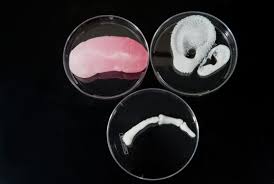
We’re not just growing tissue in petri dishes. We’re growing hope.