Can a Supercomputer Predict the Future?
What if a machine could tell you what happens next—not just tomorrow’s weather, but the next financial crash, the next pandemic, or even the next world war?
It sounds like science fiction. But in labs and data centers around the globe, researchers are working with AI-powered supercomputers that are starting to do exactly that. These ultra-fast machines analyze more data than any human could comprehend—billions of variables across science, politics, economics, and climate—to simulate and forecast the future with eerie precision.
The big question is: how close are we to truly predicting what hasn’t happened yet?
What Exactly Is a Supercomputer?
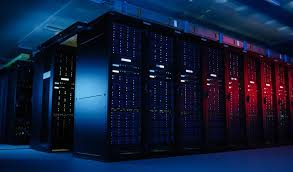
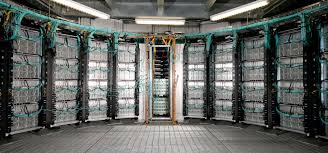
A supercomputer isn’t just a really fast laptop. It’s a colossal machine made up of thousands—or even millions—of processors working together in parallel. These systems are designed to tackle calculations so massive they’d take normal computers months or years.
The top supercomputers today can perform over a quintillion calculations per second. That’s 1,000,000,000,000,000,000 operations—every second.
But raw speed isn’t enough. The real game-changer is AI-powered modeling. That’s where future prediction starts.
What Supercomputers Can Already Predict
Here’s what the world’s most powerful machines are already simulating with impressive accuracy:
🌦️ Climate and Weather Patterns
The U.S. Department of Energy’s “Frontier” supercomputer models climate change scenarios decades in advance, down to local weather shifts and ocean currents.
🦠 Pandemic Spread
China’s Tianhe and Japan’s Fugaku were used to simulate how COVID-19 would spread through air, cities, and supply chains—helping guide lockdown and vaccine strategies.
📈 Economic Trends
Supercomputers analyze global financial flows, market behavior, and trade logistics to forecast economic turbulence or detect bubbles before they burst.
🛰️ Geopolitical Events
AI-trained models are being tested by intelligence agencies to simulate the ripple effects of wars, elections, and energy crises—with predictions spanning months or even years.
Could They Predict Everything?
Not quite. Yet.
Here’s what’s still holding machines back from becoming true crystal balls:
🔍 Data Gaps
The future is full of unknowns. No matter how powerful a supercomputer is, if the input data is flawed or incomplete, the prediction will be too.
🧠 Complex Human Behavior
People don’t always act rationally. Predicting individual or collective human behavior—revolutions, trends, emotional responses—is still incredibly messy, even for AI.
🧩 Chaos Theory
Some systems, like weather and financial markets, are inherently chaotic. A butterfly flaps its wings in Brazil… and next thing you know, there’s a storm in Texas. Supercomputers can simulate probabilities, but they can’t guarantee certainty.
The Rise of “Digital Twins”
One of the most promising uses of predictive supercomputing is the creation of digital twins: real-time, virtual replicas of complex systems like cities, hospitals, or entire ecosystems.
These digital twins can be used to:
-
Simulate the impact of new policies
-
Predict the spread of disease or pollution
-
Optimize emergency responses before disaster even strikes
In 2025, the EU launched DestinE (Destination Earth), aiming to build a full-scale digital twin of the entire planet. Think of it as a virtual Earth you can experiment on—before doing it for real.
Should We Trust Machine-Generated Futures?
As machines get better at forecasting, one ethical dilemma looms large: who controls these predictions, and how are they used?
If a supercomputer predicts:
-
A market crash… should governments intervene early?
-
A war… do we treat it as inevitable?
-
A climate disaster… do we relocate cities now?
And what happens if the prediction is wrong? Or worse—used to manipulate the public?
These tools are powerful, but also dangerous if misused. The future they show us might influence our choices, creating a feedback loop between prediction and reality.
Final Thought: The Future Isn’t Set in Silicon
Supercomputers can’t predict fate. But they can simulate possibilities—millions of them. They offer a glimpse of what might happen, not what must happen.
And that may be their greatest gift: not certainty, but foresight.
Because the better we understand what could be, the better we can shape what will be.