This Satellite Can Take High-Res Pictures Through Walls
It sounds like something ripped from a spy thriller or sci-fi blockbuster: a satellite orbiting hundreds of kilometers above Earth that can see inside buildings, detect movement, and capture crystal-clear images through clouds, darkness, and even walls.
But this isn’t fiction. It’s real, and it’s already in the sky.
Welcome to the world of next-gen surveillance satellites, where cutting-edge technology like synthetic aperture radar (SAR) and radio frequency sensing are redefining the limits of visibility. These new tools don’t just watch from above—they peer through obstacles, raising new questions about security, privacy, and power in the age of space-based observation.
The Tech Behind “Seeing Through Walls”
Traditional satellite imaging relies on visible light—great for clear days, but useless at night or in bad weather. New surveillance satellites use technologies that bypass those limits entirely.
🔍 Synthetic Aperture Radar (SAR)
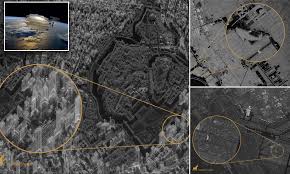
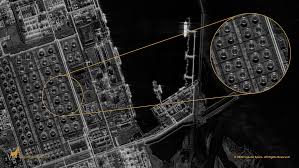
SAR doesn’t take pictures in the traditional sense. Instead, it bounces radar signals off the Earth’s surface and measures the echoes. As the satellite moves, it compiles data to create high-resolution images—often better than optical cameras.
The result? SAR can:
-
See through clouds and smoke
-
Capture clear images at night
-
Detect subtle changes in terrain, structures, or movement
Some military-grade SAR systems are now capable of penetrating light structures like tents, roofs, or even walls, depending on the material and frequency.
📡 Radio Frequency (RF) Monitoring
Other satellites scan for radio frequency signals—cell phones, Wi-Fi, Bluetooth, radar. By triangulating these emissions, satellites can track movement, detect devices, and even map activity inside buildings without a direct visual.
Combined with AI and machine learning, these systems can infer what’s happening behind closed doors.
Who’s Using This Tech?
SAR and RF surveillance satellites are already being deployed by a mix of governments, militaries, and private companies.
-
Capella Space, a U.S.-based startup, offers SAR imaging with resolution sharp enough to detect individual vehicles and structural details—regardless of weather or lighting.
-
ICEYE, based in Finland, provides rapid-revisit SAR imagery for disaster response, military, and intelligence purposes.
-
HawkEye 360 tracks global RF signals and can monitor illegal fishing, border activity, or battlefield communication from space.
While many applications are civilian—disaster response, environmental monitoring, infrastructure mapping—others are undeniably focused on intelligence gathering and surveillance.
So… Can It Really See Through Walls?
The answer is complicated.
-
Yes, in some scenarios: SAR and RF technologies can penetrate thin walls, detect movement inside lightweight buildings (like tents or wooden structures), and infer activity even in hardened areas.
-
No, in others: Most satellites can’t fully penetrate dense concrete or metal-reinforced buildings to create photographic images. But they can still pick up indirect signals, such as heat signatures, vibrations, or electronic emissions.
In effect, these systems don’t need to “see” you visually to know where you are and what you’re doing.
The Benefits: Disaster Response to National Security
Despite the creepy factor, there are real advantages to this tech:
-
Search and rescue: After earthquakes or disasters, SAR can detect collapsed structures and potential survivors under rubble.
-
Wildfire and flood monitoring: It sees through smoke and rain, offering real-time mapping for emergency responders.
-
Military intelligence: Satellites can monitor troop movement, supply lines, or missile installations without flying drones or risking personnel.
-
Illegal activity: Authorities can spot unauthorized mining, deforestation, or trafficking operations hidden from plain sight.
But What About Privacy?
The darker side of this technology is its massive potential for abuse.
-
Who’s watching whom?
-
Can private companies sell this data?
-
Will authoritarian governments use it to spy on dissidents?
Unlike traditional surveillance cameras or drones, you can’t see or hear a satellite coming. You’ll never know if you’re being watched from 500 kilometers above—even inside your own home.
There are currently few clear international regulations controlling how much resolution is too much, or whether satellites should be allowed to “see through” materials at all.
Final Thought: The Eye in the Sky Just Got X-Ray Vision
This isn’t just a better camera. It’s a paradigm shift in global surveillance. With satellites capable of imaging in ways that defy visibility itself, the line between public and private is being redrawn—quietly, and from orbit.
The next wave of intelligence won’t rely on what your eyes can see. It’ll rely on what machines can infer through walls, signals, and shadows. Whether that keeps us safe—or makes us more vulnerable—is a question we need to answer fast.
Because the future of surveillance isn’t coming.
It’s already watching.